Sunday, January 11, 2015

Welcoming Winter ~


Our feathered and furry loved ones have everything they need right here to survive the winter elements ....

Four basic habitat components they require is:

SPACE
FOOD ✓ 
WATER
COVER

Let's just say our residents are pleasantly spoiled....we even captured some eating out of the palm of our hand !!

Sunday, January 4, 2015

Burying Beetle

Burying Beetle carrying phoretic mites, meaning the mites are only using the beetle for transportation.

When I came upon this beetle, it scurried in the grass in attempt to find a hiding place from me, which made it extremely difficult to maintain my focus on it.  I had my 250mm lens on my camera body and did not have time to change it as I was anticipating the beetle would soon fly away.  So, I took a chance on getting a photo or two.  When I found focus again, there was only one hitchhiker mite left on it's back.

I had no idea what this beetle was until I researched it.  These beetles are called "Burying Beetles" because they gradually bury dead animals by excavating the soil beneath them.  The female will then lay her eggs on the carrion and their larvae feed on it.  The quicker they bury the dead animal, (mice, frogs, birds), the fewer the flies.  The fly maggots are their competition for this food source.  That is why the mites ''hitchhike'' on the beetle, because they feed off of the fly maggots.

p.s. I am glad I didn't take the time to change my lens....you got it, he flew away a few seconds later!

Wednesday, December 31, 2014

Happy New Year !!!!

Like the birds...., Let us leave behind
what we don't need to carry

~ Life is beautiful, enjoy it ~

Happy New Year !!!!


The Gray Jay gives me a couple of pecks on the hand....that's as good as a kiss on the cheek for me....
They are very loveable

Friday, December 19, 2014

Chickadee-dee-dee-dee


The Black-capped Chickadee has to be the cutest songbird I know.  They can accept you as a natural part of their environment and can be your favorite feathered friend. 

Did you know:

Each year, around autumn, Black-capped Chickadees allow brain neurons that contain old information to die, replacing them with new neurons.  This is so they can adapt to changes in their environment and social flocks.

Black-capped Chickadees hide seeds to eat later. They can place them in thousands of hiding places.  For the tiny brains they have, they are extremely intelligent.

Sunday, December 14, 2014

A Nature Walk ~


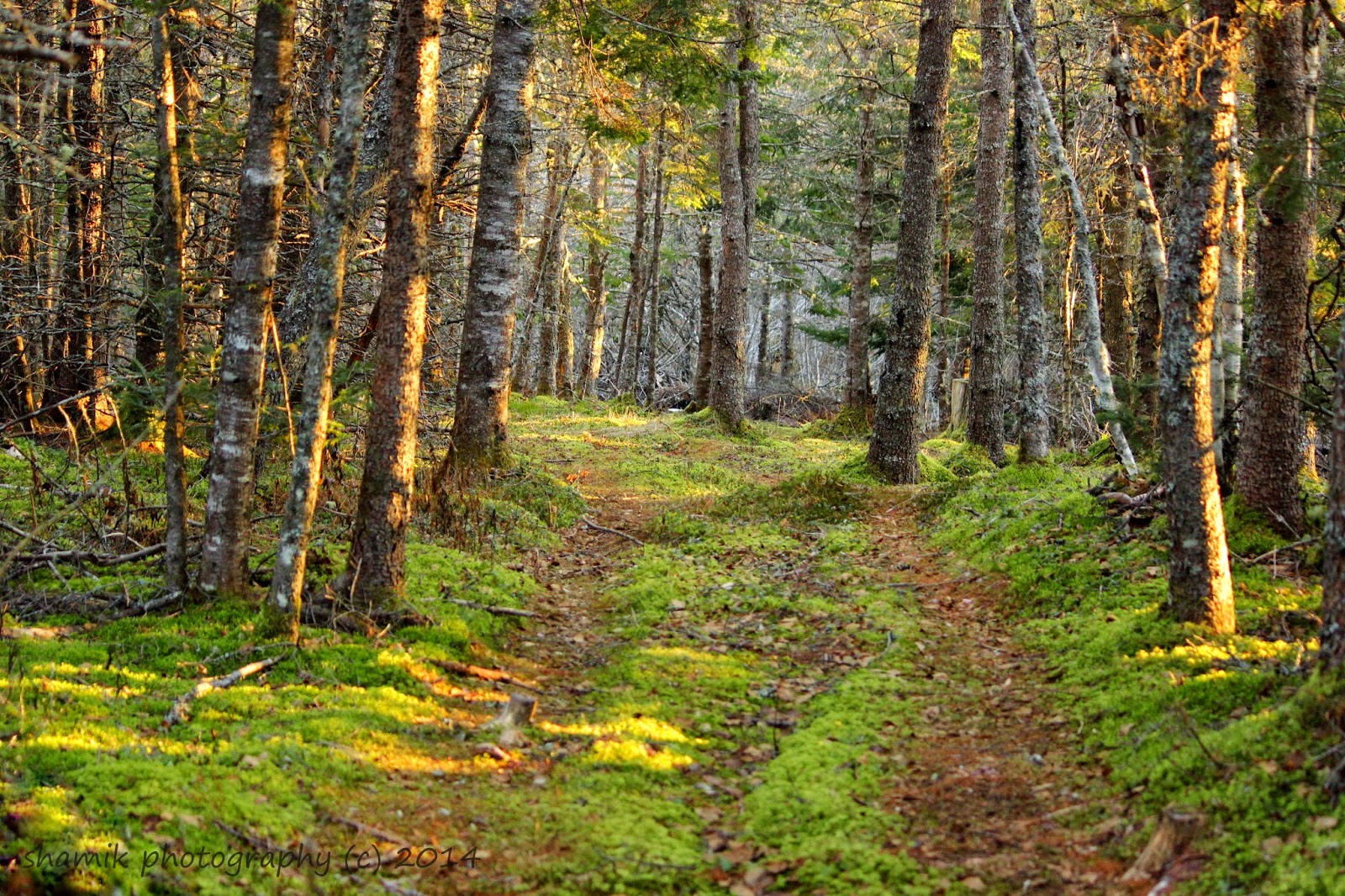
I cannot think of a better way to clear the mind naturally ....
We take a deep breath, smell the fresh air and seclude ourselves with the little creatures

We are grateful to have enough freedom to let our minds to wander right in our own backyard and it is great exercise too !!

Oh and guess what ....  It has no side affects !!

Friday, December 5, 2014

Blessings ~


Thank you for the food I am about to receive
in the Lord's name....

 AMEN....


Thursday, November 13, 2014

Pearly Everlasting

Pearly Everlasting is a wild summer perennial that attracts butterflies and other insects.  It grows and blooms into the fall and doesn't need any caring at all....It makes excellent dried flower arrangements for wreaths and vases, and some use the dried flowers to make a calming herb pillow....A homeopathic tincture can be made using this flower to treat sciatica and some forms of arthritis....

What about using the flowers in a tea? Sure, you can do that too!!

Speaking of which....


Thursday, November 6, 2014

Ribbit....Ribbit

The Eastern American Toad is also known as a "hop toad" because they move around in short hops, instead of long leaps.  He was just coming out of his burrow which was buried under the damp moss and twigs deep in the forest.  He is getting ready for his night on the town.

 
He was a charming little character,
not to mention curious....

Toads are among the last amphibians to hibernate each fall.  They may be seen into late November.


Wednesday, November 5, 2014

Crab Spider

This summer, while harvesting our red clover, we came across this Crab Spider.  They do not build webs to trap their prey.  Instead, they rely on stealth to subdue butterflies, beetles, bees, and wasps.  Crab Spiders can change their color to match the flower they are sitting on. They can become fully camouflaged in their surroundings in about two weeks.

They produce silk for drop lines and reproductive purposes.  If you look closely in the photo above, you can see the silk line.

The Crab Spider used his drop line to get down safely from the flower to this rock.

Tuesday, October 14, 2014

Happy Squirrel


This little fella was not bothered by my presence, but only interested in a good meal.  Today's menu consisted of seeds from this spruce tree cone.  They are always in search of nuts too and will eat just about anything in a backyard bird feeder.  Sunflower seeds and peanuts are a couple of favorites with our Northern Red Squirrels.  Sharing them with the backyard birds can be a challenge though.  I guess that is why they are known to most as pests.  You must admit, this little squirrel wins "The Cutest Pest Ever" award!

Wednesday, October 8, 2014

American Dagger Moth Caterpillar

I just couldn't help myself to share a little
bit of "humor" with these photos!!

This little fella is quite smart too!!
Maybe caterpillars can read!! (wink wink)
He is having a snooze under this ''caterpillar sign"

American Dagger Moth Caterpillars are large caterpillars that are typically clothed in long lemon yellow hairs.  The hairs turn pale yellow or white when they are near the cocoon stage.  They have a thick black tuft at the end and two pairs of tufts along their middle, which is a very distinctive characteristic pattern.

American Dagger Moth Caterpillars are a forest moth species.  They feed on maples, willows, poplars, oaks, and alders.  You can observe them until the end of October or November.  They will emerge the following summer as a brown moth after spending a winter inside their cocoons.


Thursday, August 21, 2014

Dragonflies and Damselflies


When I first spotted this Golden-ringed Dragonfly, I thought it was simply resting on the tree branch, but as I walked closer, I realized he was eating what was left of a Keeled Skimmer Dragonfly.  Dragonflies will feed on large insects such as wasps, beetles, bumblebees, damselflies, and other dragonflies.  They are very fast fliers; one of the largest in the dragonfly family and have a wingspan of almost 10 cm....


A pair of Damselflies during courtship on the lake grass.

In Love...............
The reflection of their courting pose, makes a shape of heart from my point of view.
In reality, when damselflies mate, they actually form a heart-shaped pose or a mating wheel.


Tuesday, August 19, 2014

Hello Johnny


This was Johnny's favorite tree to climb


Now, Johnny sits and reminisces about the good 'ole days

Common Loon


Common Loons can be seen along the coastlines of rivers and lakes across North America.  Although very sensitive to human disturbance, we were lucky enough to capture this handsome male close by.  He was focused on meeting up with the female and her baby which we spotted out further in the lake.  They have a very distinctive call that echos across the wilderness and it is music to our ears every time we hear them.

Thursday, August 7, 2014

Black-Eyed Susan


Black-Eyed Susans are one of the most popular wildflowers of North America and come in yellow, red and orange.


Bees and Butterflies, and a variety of insects are attracted to Black-Eyed Susans for the nectar. They move pollen from one plant to another as they drink the nectar, causing it to grow fruits and seeds that can move about easily with the wind.

Thursday, July 31, 2014

Nectar Cafe


This fascinating Bumblebee is seen collecting nectar and pollen from a Black Knapweed.

This wild flowering perennial provides for all kinds of insects including butterflies, bees and wasps.  Bees are extremely important pollinators for agriculture which include many varieties of fruits and vegetation.

Black Knapweed can be cut down in autumn after flowering or left through the winter so that its seeds provide a food source for the birds.

Monday, July 28, 2014

St John's Wort (Hypericum Perforatum)

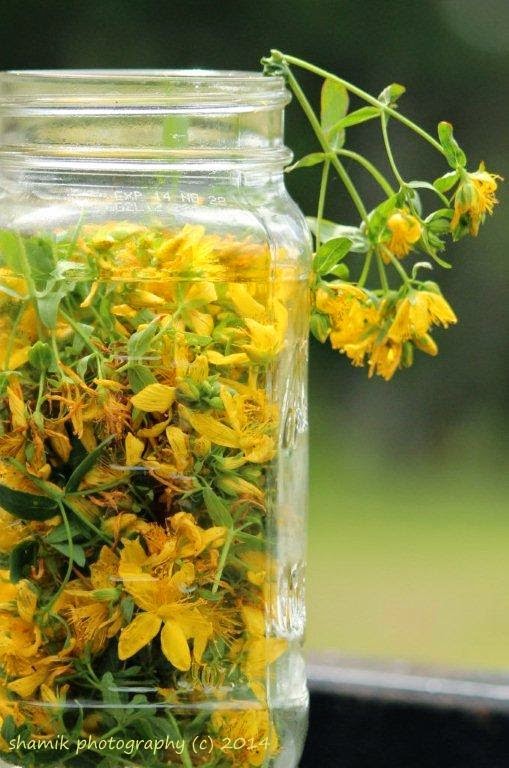
St John's Wort flowers (Hypericum perforatum) were hand picked from our property and local area ....


St John’s Wort Oil is created by infusing the flowers in a fixed oil (I use 100% organic sunflower oil) and preserved for at least 6 weeks or longer in the sun....


The active components in St John's Wort are found in the buds, flowers, and newest leaves.

St John's Wort (Hypericum Perforatum) is a very effective anti-inflammatory.... It is excellent for treating insect bites and stings, cuts, burns, bruises, sprains and speeds recovery time dramatically... This amazing oil is a must have in a first aid kit.

St John's Wort Oil (30 ml glass bottle) - 100% organic


It is also safe to use on your pets!!  We healed our pekin duck's foot... See how : http://shamik4.blogspot.ca/2012/09/homeopathy-for-my-pekin-duck.html

The St John's Wort flower is a favorite of the bumble bee


** The 2015 harvesting season is here and more of this wonderful oil will be available for purchase mid September. If you would like a custom order, please email us and we will be happy to accommodate. We have some excellent quality stock left from 2014 that can be purchased here: St John's Wort Oil (2014) or on our Ebay store

****This amazing oil has an excellent shelf life if stored in a cool, dark place

DISCLAIMER: These statements have not been evaluated by the FDA. These products are not intended to diagnose, treat, prevent or cure any disease. Customers are reminded that it is entirely of their own accord, right and responsibility to make educated choices with their own, and their family's, health care. Always consult a physician prior to the use of any herbal product or service.


Tuesday, July 22, 2014

Little Green Grasshopper

Green grasshoppers indicate fresh starts
or new beginnings.

Grasshoppers symbolize GOOD LUCK !!!!

Grasshoppers definitely have meaning!  They teach you to take a chance, to leap forward – they don’t leap backwards.

They also have “ears” in their legs, so they remind you to trust your inner voice...


Monday, July 21, 2014

Fish Hawk

This Fish Hawk, also known as an Osprey
was in search for a meal

He sighted his prey and you can see his talons opening up as he makes his second attempt at entering the water....Osprey's can catch fish, on average, one in every four dives.

 
Landing on his prey!!

Heading back to his perch with supper!!


Did you know?
During 13 days, one Osprey was documented flying 2700 miles (4345 kilometers) !!

Sunday, July 20, 2014

Watch Me Grow

Dark-Eyed Junco eggs nestled in the perennial garden by our house!!  The female incubates the eggs for 12-13 days and the nestling period is approximately 10-13 days!!

All four babies were hatched successfully
and are growing very quickly!!
Mom and Dad are not too far away!!

These little babies fledged the nest the day after this photo was taken!!  We are fortunate to have them with us year round!!  They will soon be introduced to our backyard feeders.... They prefer millet over sunflower seeds.  Dark-Eyed Juncos also eat insects including flies, moths, butterflies, ants, wasps and beetles.